Risk & Foresight
What Is a HACCP Digital System? The Definitive Guide for Hospitality Operators | Navitas
When paper HACCP is enough and when a digital system earns its place

Every food business in the UK is legally required to have a HACCP-based food safety plan. That's not optional. It's the law. But while the rules haven't changed much, the way operators run their HACCP systems has shifted fast. A HACCP digital system replaces paper logs, manual checks, andfiling cabinets with real-time data, mobile checklists, and audit trails thatactually hold up under scrutiny.
Here's HACCP in plain English. We'll walk through the seven core principles, explain why paper-based systems break at scale, and show you what a working HACCP digital system looks like in a real hospitality kitchen.Whether you're new to HACCP or looking to move from paper to digital, this is where to start.
HACCP Explained: What Every Hospitality Operator Needs to Know
HACCP stands for Hazard Analysis and Critical Control Points. It's a system for finding, assessing, and controlling risks to food safety before food reaches the customer, not after something goes wrong.
In the UK, HACCP isn't just best practice. Under Regulation (EC) 852/2004, Article 5, retained in UK law after Brexit, every food businessmust put HACCP-based steps in place and keep them up to date. The Food Standards Agency enforces this, and EHO scheck for it during every inspection.
Here's what that means in practice. You need a written foodsafety plan that maps the hazards in your kitchen, sets the points where youcontrol those hazards, and proves, with records, that your team follows the plan every day. That proof is where most operators struggle. It's also wherethe right system earns its keep.
The HACCP framework was first set out by the Codex Alimentarius Commission, a joint body of the WHO and FAO. It has been the global standard for food safety since the 1960s. The UK applies it through domestic law, and EHOs use it as the basis forevery food safety audit.
The 7 Principles of HACCP
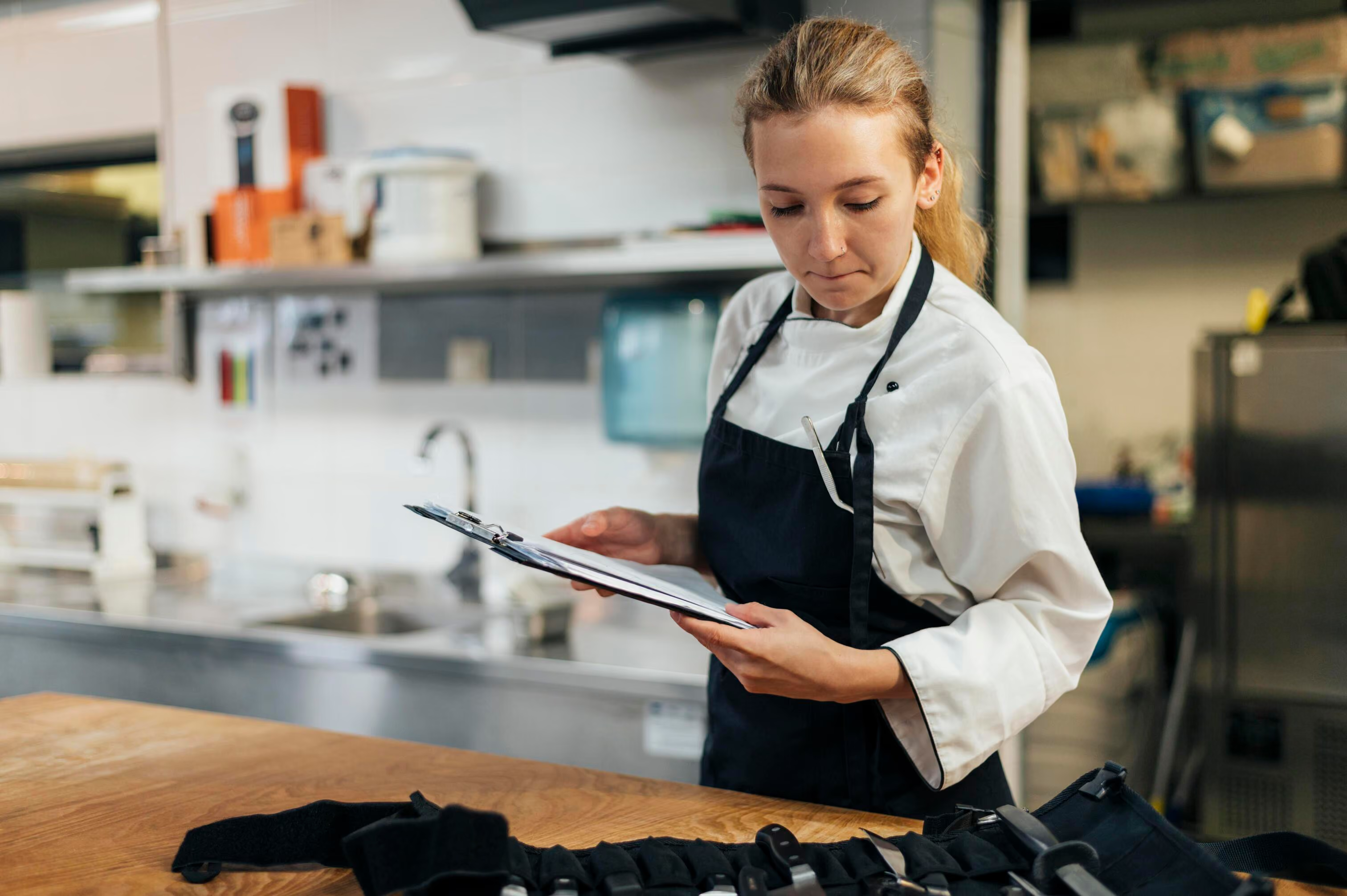
What are the seven principles of HACCP? They are:
- Conduct a hazard analysis to find risks in your food prep process.
- Set the critical control points (CCPs) where you can stop or reducethose risks.
- Set critical limits: the safe boundarieseach CCP must stay within.
- Put monitoring steps in place to check each CCP at the right times.
- Define corrective actions for when a limit is breached.
- Run verification checks to confirm the whole system works.
- Keep records of everything. This is thebackbone of your due diligence defence.
Each of these is a must. Skip one and the whole system has agap. Here's what each looks like in a real kitchen.
Principle 1: Conduct a Hazard Analysis
A hazard analysis means walking through every step of your food process, from delivery to service, and asking: what could go wrong here?
There are three types of hazard to consider. Biological hazards cover bacteria, viruses, and parasites: raw chicken stored above ready-to-eat food, a team member handling food while unwell, or a delivery left in the danger zone between 8°C and 63°C for too long. Chemical hazards include cleaning product residue on a prep surface, allergen cross-contact from shared utensils, or pest control chemicals stored too close to food items. Physical hazards range from broken glass in a prep area to a loose screw falling fromaging equipment.
In hospitality, allergen control also sits within hazard analysis. Under Natasha's Law, all PPDS items must carry full allergen labelling, and your hazard analysis should map every point in the process where allergens could transfer between dishes or surfaces. The FSA reports thatallergen incidents remain one of the leading causes of food safety enforcementaction in the UK.
Principle 2: Determine Critical Control Points (CCPs)
A critical control point is a step where you can prevent, remove, or reduce a food safety hazard to a safe level. Not every step is a CCP. Only the ones where losing control means real risk.
Common CCPs in hospitality kitchens include cooking (reaching 75°C core temp to kill harmful bacteria), chilled storage (keeping food below 8°C, with 5°C as the ideal target), hot holding (food on the bain-marie must stay above 63°C at all times), and delivery checks (confirming chilled goods arrive below 8°C and frozen items at -18°C).
The key is to focus on the points that truly matter forsafety. Your HACCP plan shouldn't try to list every task in the kitchen. Focuson the steps where losing control creates a real risk to the customer. Awell-focused HACCP plan with five or six CCPs is far better than a bloated onewith twenty that nobody follows.
Principle 3: Establish Critical Limits
Every CCP needs a clear, measured limit. No grey areas. If your CCP is "chilled storage," the critical limit is 8°C. If it's"cooking core temperature," the limit is 75°C. Hot hold must stay at or above 63°C.
These aren't guidelines. They're hard lines. If a reading falls outside the limit, the food is at risk and a corrective action must follow. Your system should flag any breach the moment it occurs, not hours later.
Principle 4: Establish Monitoring Procedures
Monitoring answers three questions: who checks, how often,and with what tools?
For food temperatures, you use probes. A food temperature probe measures the core tempof a dish at cooking, at service, or on delivery. Probes should be calibratedon a set schedule, daily or weekly depending on use.
For appliance temperatures (fridges, walk-ins, freezers) you use pods. A temperature monitoring device like a wireless pod sits inside the unit and sends readings at set intervals. If a fridge drifts above 8°C, the system raises an alert before staff even notice.
This is a key distinction. Probes check food. Pods check appliances. Both feed data into the same platform so nothing gets missed.
Principle 5: Establish Corrective Actions
When a critical limit is breached, what happens next? Your HACCP plan must spell this out. There's no room for guesswork.
If a probe reading shows a chicken breast at 68°C core temp, the corrective action is to cook it further until it hits 75°C. If a fridge pod reads 11°C, the corrective action may be to move food to a backup unit and check the appliance. If a cleaning chemical is found near open food, the foodgets disposed of and the team gets retrained.
Every corrective action must be logged in full. The record should show what went wrong, what was done about it, who carried it out, and when it happened. In a digital system, this trail is captured at the point of action, not scribbled on a piece of paper hours later from memory. That level of detail is what turns a corrective action into a genuine due diligence defence.
Principle 6: Establish Verification Procedures
Verification means stepping back and asking: does this system actually work in practice, or is it just a document that lives in afolder?
This includes internal kitchen audits, third-party assessments, probe calibration checks, and regular reviews of your HACCP plan against the latest guidance. It also means checking that corrective actions arebeing closed out on time, not just raised and then forgotten about by the next shift.
During a typical EHO inspection, the officer will ask to see your last three months of records within the first ten minutes. Audit software can schedule and track verification reviews across all your sites, so you can pull those records up in under a minute. That speed signals an operation that takes food safetyseriously, and it makes a strong first impression.
Principle 7: Establish Record-Keeping and Documentation
This is where HACCP meets the real world, and where mostoperators hit a wall.
Under UK food safety law, you must keep written records thatshow your HACCP plan is being followed. Temp checks, corrective actions,cleaning schedules, training records, supplier documents. All of it needs to bestored, dated, and ready for an EHO to inspect at any time.
Paper records can handle this at a single site. But they get lost, smudged, backdated, and left incomplete. In our experience working with multi-site operators, paper-based HACCP record keeping is the number one weakspot that EHOs target. A digital platform fixes this by logging records with a time stamp, a user ID, and a site tag. Data that can't be faked or lost.
This is the point where many operators start to see the casefor going digital. And it's the right instinct.

Why Paper-Based HACCP Systems Fail in Multi-Site Hospitality
Paper HACCP works at one or two sites. Beyond that, it breaks. Here's why.
Records go missing. A folder gets misplaced during a deep clean. A page gets torn out. Three weeks of temp logs vanish and no body notices until the EHO asks for them. With a digital platform, every record is stored in the cloud: backed up, searchable, and safe.
No consistency across sites. Site one follows the HACCP plan to the letter. Site five has an older version of the checklist that was last updated eight months ago. Site nine has stopped logging corrective actions altogether because the forms ran out and nobody reordered them. Paper systems can't enforce consistency because there's no central view of what eachsite is actually doing.
No real-time alerts. A fridge fails at 2am on a Saturday. On paper, nobody knows until the morning shift opens the door and finds warm stock. The system sends an alert the moment the pod detects a temprise, even when the kitchen is closed.
Impossible to manage centrally. An area manager wants to know which sites completed their HACCP checks this week. With paper, thatmeans ringing each site or waiting for the next visit. With a digital platform, the data is on a dashboard in seconds.
We've seen operators cut compliance admin time by 40 to 60%after moving to digital. Just as important, digital food safety records improvein quality because the system won't accept blank fields or late entries.
What a HACCPDigital System Looks Like in Practice
Imagine a Tuesday morning at one of your sites. The kitchen opens at 6am. Here's how a HACCP digital system runs through the day.
6:00am: Opening checks. The first team member logs in on a tablet. The system shows the morning checklist: fridge temps (auto-loggedby pods overnight), probe calibration check, and a visual inspection of the prep area. Any fridge that drifted above 8°C overnight is already flagged inred.
8:30am: Delivery arrives. The team member probes achilled delivery. The reading logs straight into the HACCP digital system with a time stamp and the team member's name. If the temp is above 8°C, the system prompts a reject-or-accept decision and requires a note.
12:00pm: Hot hold check. Soups and sauces on the bain-marie get probed. All above 63°C. The readings log in green. If one had dropped below, a corrective action prompt would fire at once.
3:00pm: Area manager review. The area manager checksthe dashboard from their laptop. All twelve sites show green for morning checks. Site eight has an open corrective action from a delivery reject. The area manager adds a note and schedules a follow-up.
5:30pm: Shift handover. The closing team signs off the evening checklist. The shift handover log is digital, no scribbled notes lost on a counter. The day's full HACCP record is complete, stored, and ready for any audit.
That's what food safety management software looks like when it's built for how kitchens actually run, not how an office thinks they should run. No clipboards. No guesswork. Every record linked back to a person, a time,and a site. And if an EHO walks in tomorrow, the whole day's HACCP trail isready to view in seconds.

How to Transition from Paper to a HACCP Digital System
Moving from paper to digital doesn't need to be a big-bang project. Here's a six-step path that works.
Step 1: Audit your current paper system. Map out every HACCP document you use: temp logs, cleaning schedules, corrective action forms, supplier checks. Note what's missing, what's out of date, and what varies between sites. Be honest about the gaps.
Step 2: Map your CCPs to a digital format. Take your existing critical control points and build them into a digital framework. Your digital system should mirror your current HACCP plan, not replace it with a generic template.
Step 3: Set up alerts and thresholds. Configure the system to match your critical limits. Fridge above 8°C? Alert. Hot hold below 63°C? Alert. Missed temp check? Alert. The system should do the chasing, not your area manager.
Step 4: Train your teams. Roll out training at every site, not one at a time. Use the same training content across all locations to keep things consistent. Show staff how to log checks, respond to alerts, and close corrective actions on the spot.
Step 5: Run paper and digital side by side. For two weeks, keep both going. This builds confidence and catches anything the digital setup missed. After two weeks, if the system is capturing everything the paper did, and more, switch off the paper.
Step 6: Review after 90 days. Check adoption rates,flag any sites that aren't using the system fully, and tweak your setup. The system isn't set-and-forget. It needs care, just like any food safety process.
One common mistake operators make is trying to build the perfect system before going live. Don't wait for perfection. Start with your most critical checks (temps, cleaning, corrective actions) and add the restover time. A system that captures 80% of your checks from day one is far better than a perfect setup that takes six months to launch and loses staff buy-in along the way.
HACCPChecklist: Free Download
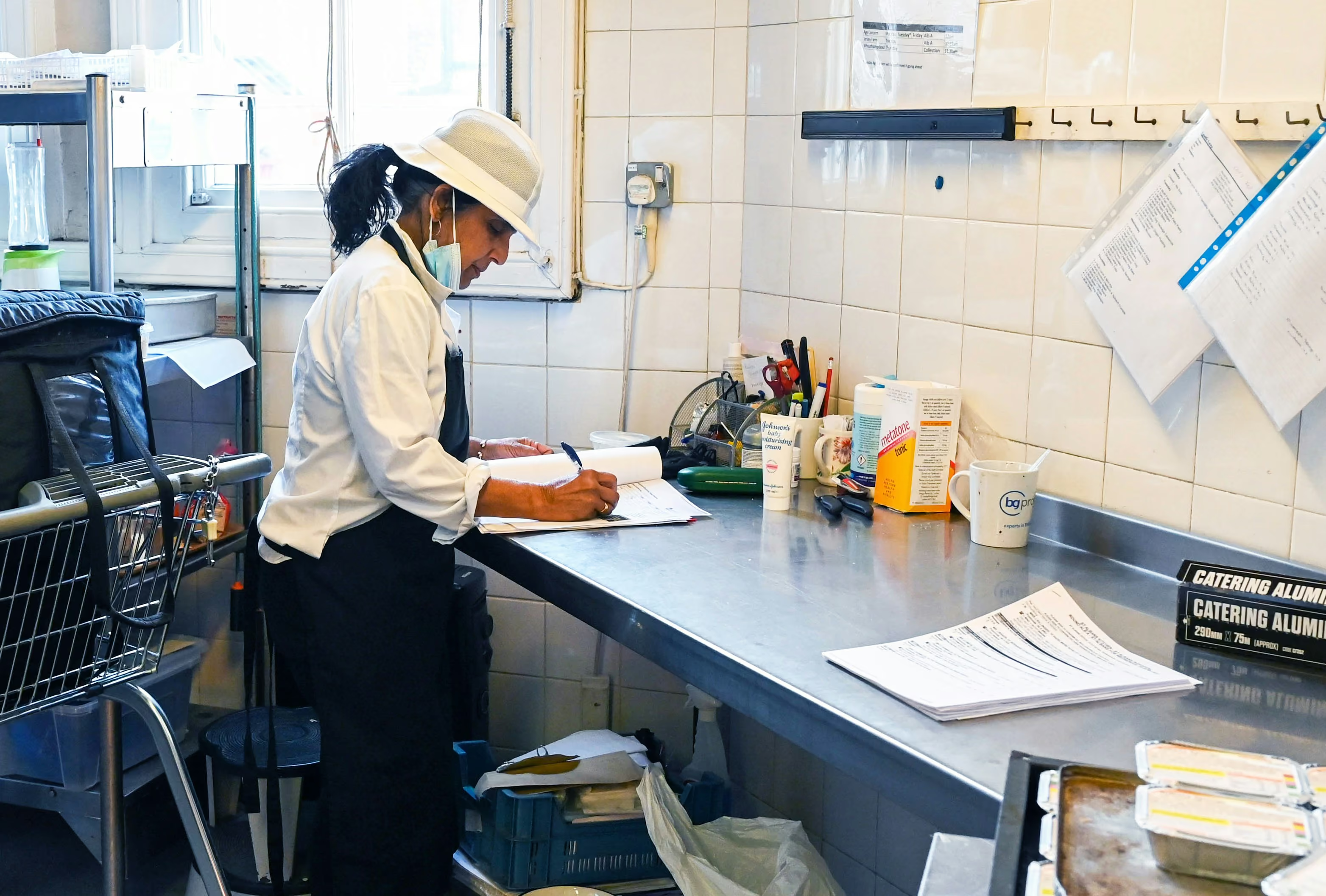
A good HACCP checklist template helps you audit where youare today. It should cover:
- All CCPs in your food prep process, with critical limits for each.
- Monitoring schedules: who checks, how often, and with what tools.
- Corrective action procedures for each type of breach.
- Verification steps: internal audits,probe calibration, plan reviews.
- Record-keeping requirements: what gets logged, where, and for how long.
If you're still on paper, use a HACCP checklist template to score your current system against the 7 principles. Walk through each principle and ask: do we have this covered, is it documented, and could we prove it to an EHO today? The honest answers will show you exactly where a HACCP digital system would plug the gaps.
Want a copy? Contact us for a free HACCP assessment template tailored to your food safety compliance needs, or explore our resources page for guides built for multi-site hospitality operators.
Next Steps
HACCP is the foundation of food safety in every UK kitchen.The seven principles haven't changed, but the tools to run them have.
A HACCP digital system gives you real-time data, audit-ready records, and a level of visibility that paper can never match. For operators running more than a handful of sites, it's no longer a nice-to-have. It's a must.
Ready to see HACCP in action across your sites? Explore Navitas digital food safety to see how we help multi-site operators run their HACCP plans from one platform. Or visit our food safety software page to book a free demoand see the system first-hand.