Got less than a 5-star food hygiene rating?
Start with the areas you can improve today.
A food hygiene rating below 5 does not have to stay that way. The right next step is to understand where your business scored down and start addressing the gaps.
Navitas Safety has supported food and hospitality businesses with food safety, training and compliance for over two decades.
Spoken to us today? You’re in the right place.

No pressure. Practical food safety support when you need it.



Why did you score below 5?
Food hygiene ratings consider three broad areas. Your inspection report will show where improvement was required.
Hygienic food handling
How food is prepared, cooked, stored and handled.
Cleanliness & condition
How your site, facilities, equipment and layout are maintained.
Management of food safety
How your business manages food safety day to day.
Food safety is what we do.
Navitas Safety helps hospitality and food businesses manage food safety, compliance and training. Our Academy is designed to give teams access to practical online training that can be purchased and assigned quickly.


A good place to start: make sure your team is trained.
If your inspection highlighted weaknesses in food handling or management of food safety, review whether the right people have the right training.


Managing Food Safety Level 3
For supervisors, managers and people responsible for food safety.
View course for pricing
Start with your inspection report.
Your rating is based on what the environmental health practitioner saw during your visit. Your report outlines legal requirements and recommendations. Any legal requirements include completion timeframes that must be prioritised and followed.
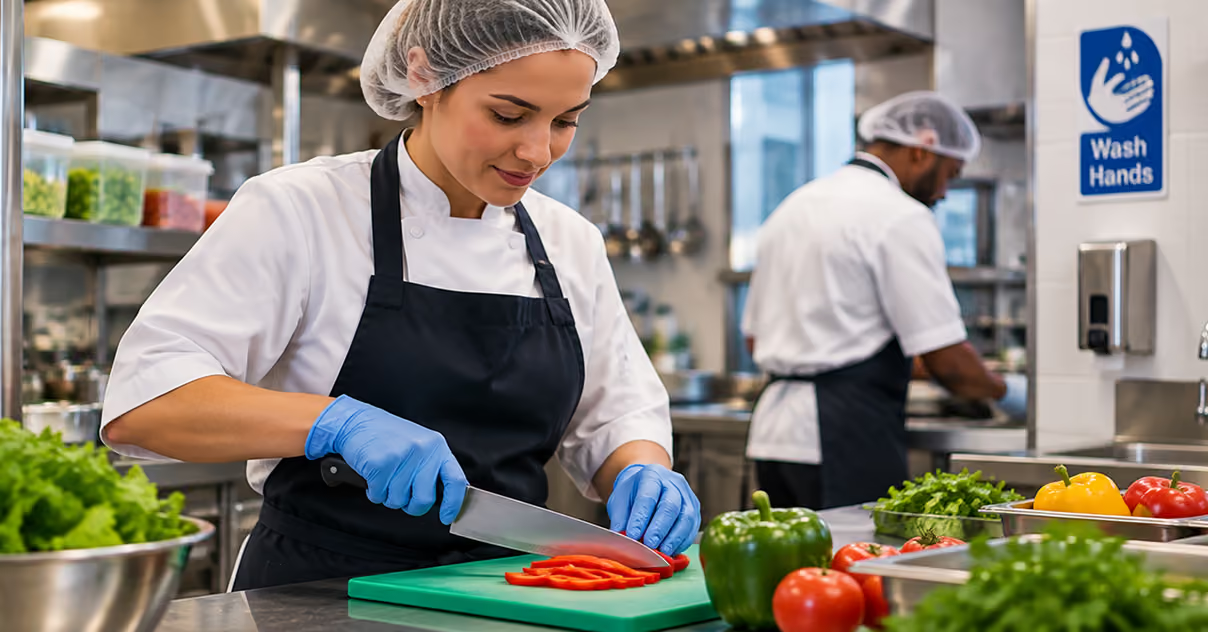
Hygienic food handling
Focuses on safe food handling from delivery to service, including preparation, cooking, cooling, and reheating. Key areas cover raw and ready-to-eat segregation, stock rotation, temperature controls, correct handwashing, and allergen management.

Cleanliness & condition
Focuses on kitchen layout, structural condition, and cleanliness. Ensure prep areas are separated from waste and dishwashing, facilities have dedicated handwashing basins and hot water, pest controls are active, and deep cleaning covers high-level areas.
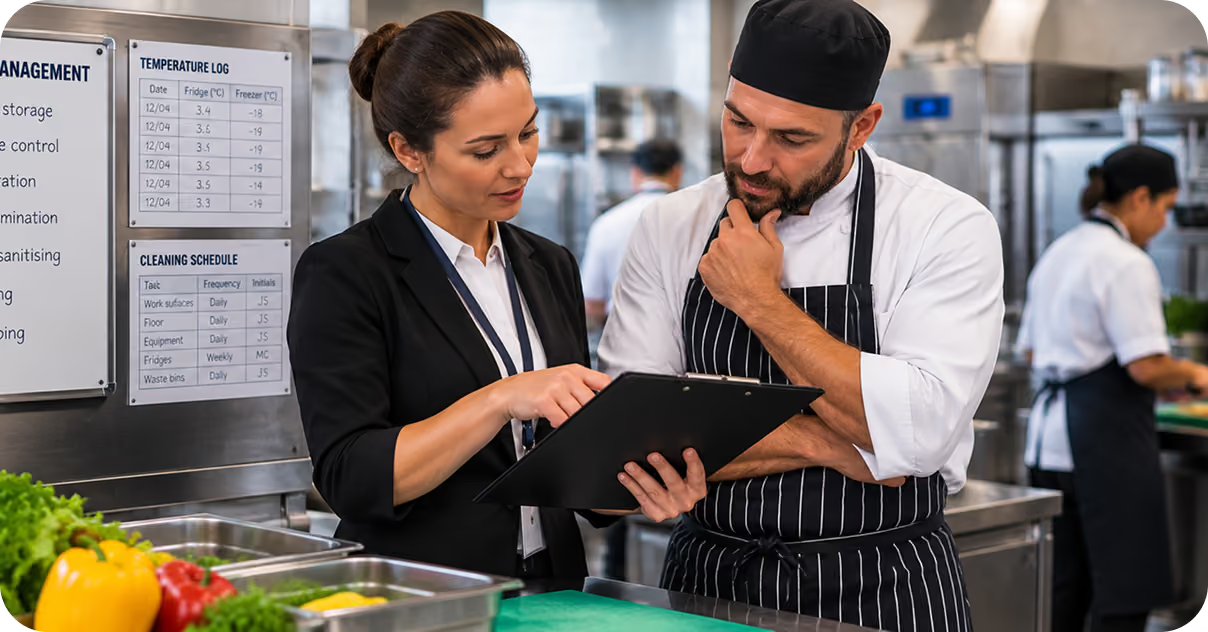
Management of food safety
Focuses on documented HACCP systems, daily monitoring, and team competency. Ensure high-risk processes are detailed, due diligence records (temperature, cleaning, allergens) are verified by management, staff are properly trained, and corrective actions are swift.
Training may form part of the answer, particularly where staff knowledge or management controls need strengthening.
Your first 5 actions after a rating below 5.
A straightforward starting point for turning your inspection feedback into an action plan.

Read the inspection report in full.

Identify which of the three rating areas scored down.

Correct any immediate food safety or cleanliness issues.

Review staff training and management controls.

Create an action plan and keep evidence of what you have changed.



Food hygiene rating FAQs
Straight answers to common next-step questions.
Will online food safety training automatically improve our UK Food Hygiene Rating (FHRS)?
No, training alone will not automatically change your rating, but it directly impacts two of the three inspection categories. The UK Food Standards Agency (FSA) rates businesses on Hygienic Food Handling, Cleanliness & Condition of Facilities, and Management of Food Safety. Accredited training (such as Food Safety Level 2 or Level 3) addresses staff competency, HACCP compliance, and food handling practices, but physical structural non-conformances must be fixed on-site alongside training to secure a 5-star rating.
Which food hygiene training level (Level 1, 2, or 3) is required for chefs, supervisors, and food handlers?
Under UK Food Safety Law (Regulation EC No 852/2004), training must be commensurate with an employee's specific workplace responsibilities. The standard training levels are structured as follows:
Level 1 – Food Safety Awareness: Essential for low-risk food handlers, kitchen porters, waiting staff, and front-of-house team members who do not directly prepare or cook high-risk foods.
Level 2 – Food Safety in Catering: Required for chefs, cooks, kitchen assistants, food prep teams, and any staff actively handling, cooking, or serving open foods.
Level 3 – Managing Food Safety: Required for head chefs, kitchen managers, supervisors, site managers, and business owners responsible for maintaining HACCP systems, managing staff hygiene, and liaising with Environmental Health Officers (EHOs).
Allergen Awareness Training: Essential alongside Level 1–3 qualifications for all front-of-house and kitchen staff to ensure compliance with Natasha's Law and accurate customer allergen declaration.
Can I buy training for several employees?
Yes. Choose your course, enter the quantity of learner licences needed for your team, and complete your purchase. One licence is required per learner, and access is delivered instantly.
How quickly can staff access and complete Navitas Safety e-learning courses?
Upon purchasing learner licences through the Navitas Academy eshop, courses can be instantly assigned to employees via email or LMS link. Learners can complete self-paced modules on desktop or mobile devices, with official certificates generated automatically upon completion to present as evidence to your EHO.
What should I look for on my inspection report?
Look for the specific comments under hygienic handling, cleanliness and condition, and management of food safety. Prioritise urgent issues and use the findings to make an action plan.
Can Navitas review my situation with me?
Yes. Our food safety specialists can review your inspection report, identify key non-conformances, and recommend the exact training and software tools needed to restore your 5-star rating.
How do I request an EHO re-inspection or re-rating audit in the UK?
You can request an unannounced re-rating inspection from your local council once all required improvements are completed.
In England, Wales, and Northern Ireland (FHRS): Operators can submit a re-rating request form to their local authority Environmental Health department at any time. A local authority fee applies (typically £150–£300), and the new rating replaces the old one.
In Scotland (FHIS): Businesses with an "Improvement Required" certificate can request an unannounced re-visit free of charge to secure a "Pass" outcome.