Multi-Site Control
Contract Catering Compliance: Managing Food Safety Across Client Sites in 2026
Contract catering compliance covers UK law, sector rules, and client SLAs all at once. Here is a practical framework for managing it across every client site in 2026.
Contract catering compliance is the hardest form of food safety work in UK hospitality. You are running a kitchen you do not own, with staff you may not fully manage, under a client who has their own brand rules on top of UK law. Some days you are in an office canteen. The next morning you are in a school. By Friday you are in a hospital ward, and catering an evening event at a corporate venue. As of April 2026, the bar for contract catering compliance has moved up on both sides. Regulators are asking harder questions. Clients are writing tougher SLAs into every renewal. This guide sets out the unique challenge, the rules you must meet, how to run a steady contract catering compliance programme across sites you do not own, how to handle client audits, and how digital tools are now changing the shape of the work.
The Unique Compliance Challenge for Contract Caterers
You do not own the kitchen. You may not own the gear, the fridges, or the layout. The client sets the opening hours, the security rules, and the site rules you have to work inside. Staff may be shared with the client, rotated in from agency, or based full-time on a site you visit once a month.
Every site is different. An office canteen in central London feeds 300 people over a 90-minute lunch window. A school kitchen handles allergens for 400 children across three sittings. A hospital ward serves soft-texture meals to frail patients. An event brief may cover 800 plates in a marquee with no fixed utilities. Contract catering compliance has to be steady across all of it, even when the sites have almost nothing in common.
The result is a dual duty. You must meet UK food safety law everywhere. You must also meet the client's brand rules and SLA, which often sit above the legal minimum. In our experience working with caterers across education, healthcare, and corporate sectors, the groups that handle this well design one compliance system and then adapt it site by site. The ones that struggle try to run a different system at every client and drown in their own paperwork.
The Regulatory Framework: What Contract Caterers Must Comply With
Contract caterers meet a wider stack of rules than most hospitality formats. Start with the UK baseline. Then stack the sector rules on top.
The core UK stack is the Food Safety Act 1990, Regulation (EC) No 852/2004 on food hygiene (held in UK law after Brexit), and the Food Safety and Hygiene (England) Regulations 2013. HACCP is required under those rules. Natasha's Law (the Food Information (Amendment) (England) Regulations 2019) covers allergen labels for prepacked for direct sale items. RIDDOR 2013 covers workplace incident reports. COSHH covers chemical handling in every cleaning routine.
Sector rules sit on top. School contracts must meet the School Food Standards set by the Department for Education. Healthcare contracts must meet NHS food safety and nutrition standards. Events and corporate catering may carry BRCGS or ISO 22000 clauses in the deal. Some clients ask for third-party certificates as a tender condition.
Client SLAs add a third layer. A contract catering food safety SLA usually sets a minimum food hygiene rating per site, response times for incidents, audit-ready record keeping, and KPI reporting on a monthly cycle. A strong contract catering compliance programme has to cover all three layers without running three separate systems.
Managing Compliance Across Sites You Don't Own
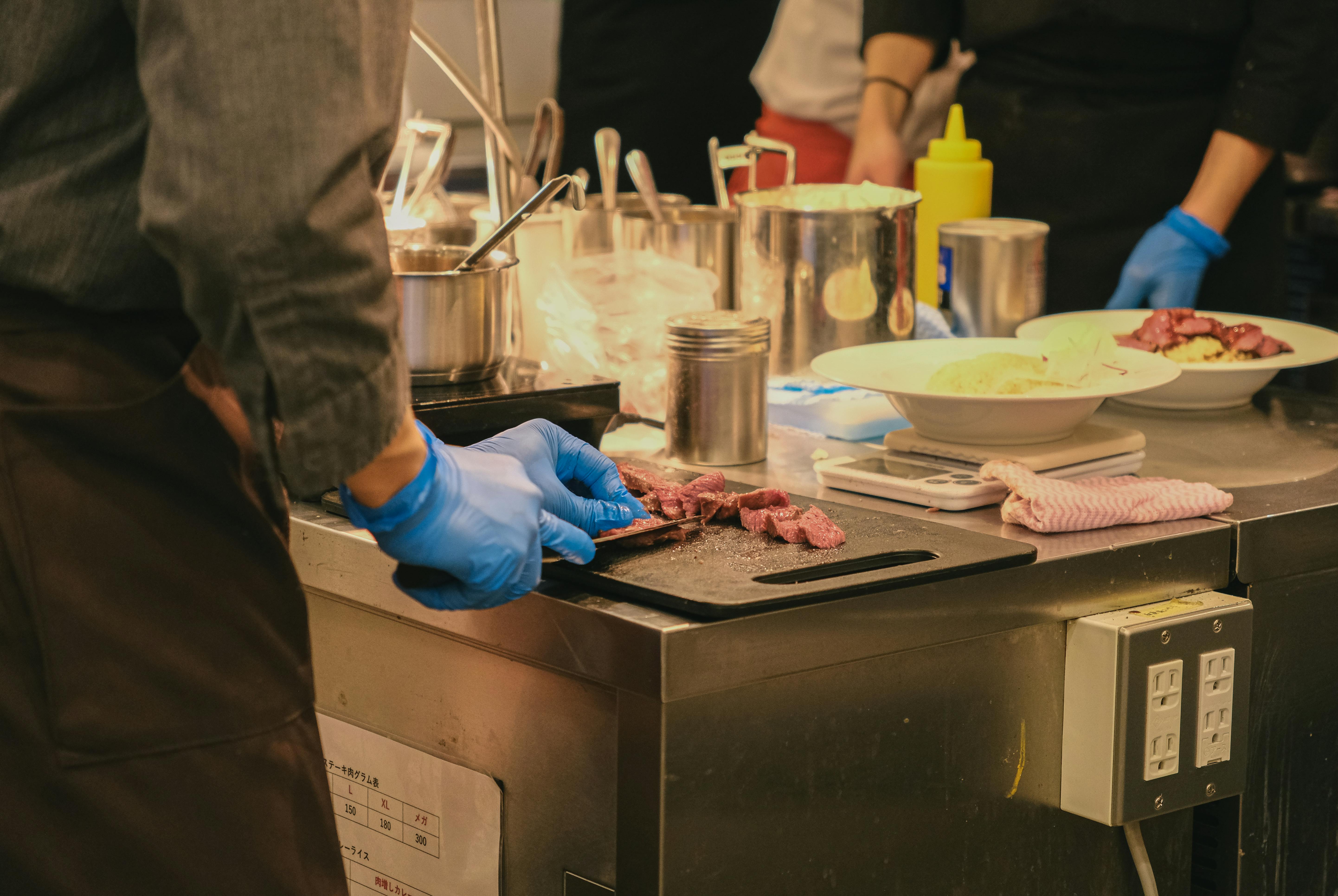
Here is where contract catering compliance differs from standard hospitality. You cannot set one kitchen standard. You have to set one compliance system on top of whatever kitchen you walk into on day one of a new deal.
Four practical moves make this workable. First, a single core compliance standard used at every site — HACCP plan, temperature records on every appliance, cleaning schedule, training record, allergen matrix. Second, a site-specific addendum that captures the local layout, the client rules, the allergens in scope, and any sector overlay. Third, a shared digital backbone so head office sees every site on one dashboard no matter who the client is. Fourth, a clear handover drill each time a site changes client or caterer — a contract catering compliance audit at handover is now standard practice.
Shared staffing is the extra snag. Agency workers and client staff rotate in and out of your kitchens with mixed training records. An induction routine that checks Level 2 Food Hygiene before the first shift is the baseline. In 2026 it is standard across the better-run caterers.
Gear mix is the other snag. A client-owned blast chiller may log temps in a different format from your other sites. A fitted pod on every fridge across every client site takes that mix out of the compliance record. The hardware varies; the data does not.

Client Audits and SLA Reporting
Clients audit. The better ones audit every quarter. Contract catering compliance under these terms is not a once-a-year task. It is a steady stream of evidence.
A client audit usually asks for six things: current temperature records on every appliance, training records by named staff member, cleaning schedule sign-off with time stamps, incident and near-miss logs for the last 12 months, HACCP plan aligned to the current menu, and corrective action proof on every finding from the last audit. Digital systems turn that audit into a two-hour screen-share. Paper systems turn it into a week of frantic photocopying.
SLA reporting is the steady state between audits. A typical contract catering SLA asks for monthly compliance KPIs: hygiene rating per site, audit scores, incident counts, training status, and corrective action closure times. Some clients want the data in their own dashboard format. The caterers that win re-tender bids in 2026 are the ones who can flex their reporting to match the client, not the other way around.
We've worked with caterers running 50+ client sites across education, healthcare, and corporate sectors. The pattern is clear. The ones that treat audit prep as a daily habit, not a quarterly panic, keep contracts at much higher rates.
Ready to tighten contract catering compliance across every client site? See our contract catering solutions built for multi-client operators.

Building a Contract Catering Compliance Framework
A practical contract catering compliance framework has five parts. Build these in order, adapt each to the client mix, and the system carries across any new deal you win.
1. Core compliance standards. Set at every site: HACCP plan, temperature records on every appliance, colour-coded allergen matrix, daily cleaning schedule, incident log, staff training record. These are the same no matter the client.
2. Site-specific adaptations. A site addendum for each client that captures the layout, client rules, sector rule, menu details, and any SLA clauses that go beyond the core. The addendum changes; the core does not.
3. Staff training matrix. Every food handler mapped to the right Level 2 or Level 3 Food Hygiene cert, plus any sector modules (school food handling, healthcare-specific allergen care, event logistics). Refresh cycles tied to menu changes and rotation patterns. Agency and client-shared staff are in the plan by default, not as an afterthought.
4. Central monitoring. One dashboard for every site, every client, every shift. Alerts for fridge drifts, overdue cleaning tasks, expiring training certs, and open corrective actions. Head office sees the state of the estate in real time, not at month-end.
5. Client reporting automation. Monthly SLA reports built from the same system, styled per client, sent on schedule. No spreadsheets at midnight on the last day of the month. Good catering compliance management turns reporting from a stress point into a by-product of daily work.
A strong food safety software platform covers all five parts. The groups investing in this in 2024-2025 are now keeping contracts at higher rates and winning new tenders on the strength of their evidence alone.
How Digital Platforms Solve the Multi-Client Challenge
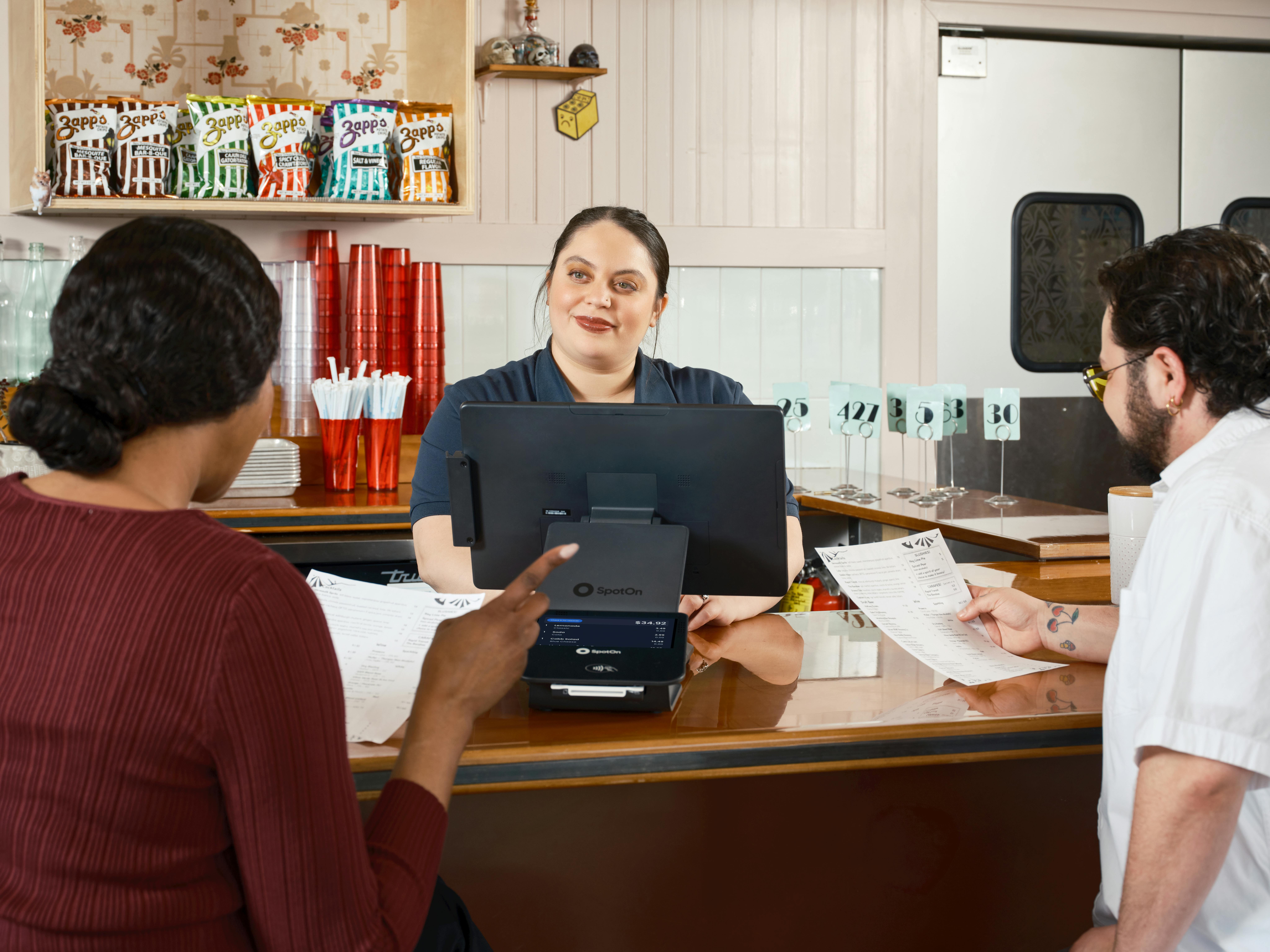
Paper-based contract catering compliance was always a fragile setup. Records lived in folders on client sites. Head office saw them only when something went wrong. Multi-site catering management ran on phone calls and spreadsheets.
Digital platforms change the maths. One platform holds every site. Checklists are set up per client. Reporting is branded per client. Alerts route to the right area manager. Past data supports re-tender talks with real proof rather than anecdote.
Three wins stand out. First, client-branded reports built on their own — the caterer looks sharp, the client gets what they want, and nobody is hand-formatting PDFs at 11pm. Second, a full audit trail per client that survives contract changes, staff churn, and gear swaps. Third, the skill to onboard a new site in days rather than weeks, because the compliance system is already running.
The better audit software now links with incident management, training, and temperature monitoring. A client audit becomes a two-hour chat backed by live data rather than a week of printing. Contract catering compliance is one of the clearest use cases for a joined-up digital stack, because the multi-client, multi-site complexity is exactly what the software was built for.

Frequently Asked Questions
What food safety standards apply to contract caterers?
Contract caterers must meet the Food Safety Act 1990, Regulation (EC) No 852/2004, the Food Safety and Hygiene (England) Regulations 2013, and Natasha's Law for allergen labels. Sector rules apply on top: School Food Standards for education, NHS nutrition and food safety rules for healthcare, and any BRCGS or ISO 22000 clauses the client writes into the deal. The client SLA adds a further layer of KPI and reporting duties.
How do you manage compliance across multiple client sites?
The most useful approach is one core compliance standard used at every site, with a site-specific addendum for client rules and sector overlays. A shared digital platform gives head office real-time sight of every kitchen, every client, and every shift. Set-piece training, alert triggers, and automated client reports keep the system running without extra manual work for area managers or site chefs.
What insurance do contract caterers need for food safety?
Contract caterers need public liability, employers' liability, and product liability as a baseline. Most client contracts set minimum cover levels — often £5m to £10m on public liability. Professional indemnity is common where the caterer gives nutrition advice or designs menus. A strong incident and audit trail cuts premiums at renewal and protects the caterer in any claim.
Who is responsible for food safety — the caterer or the client?
The contract caterer is legally on the hook for food safety in the kitchen it runs, even on a site owned by the client. Under the Food Safety Act 1990, the food business operator carries the duty. The caterer is usually the registered operator at that site. The client's duty is typically limited to giving a suitable premises and working with the caterer on shared health and safety tasks. The SLA may move commercial duties around, but the legal duty sits with the caterer by default.
Next Steps
Contract catering compliance is the clearest example of a multi-layer duty in UK hospitality. The legal stack, sector rules, client SLAs, and site-specific conditions all run at the same time. The groups that handle it well build one system, use it everywhere, and lean on digital tools to make the complexity invisible to the client.
Start with the five-part framework. Audit your core standards. Map the client-specific layers. Centralise the monitoring. Then decide whether your reporting to clients is a strength you can sell on tender, or a weakness that costs you contracts at renewal.
For site-specific advice, always consult a qualified food safety professional. The Food Standards Agency publishes the regulatory framework that underpins every point in this piece.
Ready to see how contract catering compliance runs on one platform across every client site? Book a free Navitas demo or explore our multi-site solutions built for group-level rollouts.