Multi-Site Control
Operational Control in Secure Kitchens: A Guide to Digital Compliance
How digital compliance strengthens established food safety management in secure kitchens supporting catering teams, improving audit readiness, and giving governors real-time visibility across prison estates.

Food safety management systems provide an established and effective framework for managing food safety across all catering environments, including secure kitchens within prisons and other judicial settings. The fundamental principles of hazard identification, risk assessment, operational controls, monitoring and corrective action remain consistent, regardless of the environment in which food is prepared and served.
However, secure kitchens present particular operational considerations. Catering teams may be required to prepare and serve hundreds of meals within fixed service periods, work alongside rotating kitchen teams and maintain effective food safety controls within a highly regulated and security-conscious environment. These factors require careful planning, clear procedures, effective supervision and consistent implementation of the established food safety management system.
Digital compliance systems can support these arrangements by simplifying routine monitoring, reducing administrative demands and improving the visibility of food safety performance. By integrating digital technology into an existing food safety management system, secure catering operations can strengthen consistency, streamline record-keeping and provide management teams with timely information to support effective operational control.
This guide explores how digital compliance can complement established food safety management practices within secure kitchens, supporting catering teams in maintaining consistent standards, improving operational efficiency and demonstrating compliance across individual establishments and wider judicial estates. See how the platform is applied specifically to this sector on the Navitas Safety Judicial page.
Why Secure Environments Demand a Tailored Approach Scale, Speed, and Shrinking Resources
Secure kitchens operate within established food safety management frameworks but must also accommodate the specific operational requirements of custodial environments. Fixed meal service periods, large-scale food production, security arrangements and the involvement of rotating kitchen teams require clear procedures, effective supervision and reliable monitoring.
Digital compliance systems can support these established arrangements by simplifying routine checks, improving the accessibility of records and enabling catering managers to maintain effective oversight of food safety activities throughout the working day.

A Workforce That Changes Constantly
Secure kitchens may involve a combination of experienced catering professionals, prison staff and prisoners undertaking supervised catering activities. This requires clearly defined responsibilities, appropriate training and effective supervision to ensure food safety procedures are consistently followed.
Digital systems can complement these arrangements by providing accessible instructions, standardised monitoring procedures and clear records of completed checks. This helps support consistency across different teams and shifts while allowing catering managers to identify where additional guidance, training or supervision may be required.
Compliance With No Margin for Error
Prison kitchens are not governed by a separate, lighter regulatory regime. They sit under the same UK food law as any commercial kitchen: the Food Safety Act 1990, Regulation (EC) No 852/2004 on the hygiene of foodstuffs, and the Food Safety and Hygiene (England) Regulations 2013 that apply it domestically, alongside the Food Information Regulations 2014 and the Health and Safety at Work etc. Act 1974. Local authority food safety officers inspect prison kitchens on the same basis as any other food business, and prison catering premises appear on the standard national Food Hygiene Rating Scheme alongside restaurants and care homes.
On top of that sits a second layer of scrutiny specific to custodial settings. HM Inspectorate of Prisons, an independent statutory inspectorate, assesses every establishment against four “healthy prison” tests: safety, respect, purposeful activity, and preparation for release. Food is not scored as its own category, but catering standards feed directly into the safety and respect judgements that shape a prison's overall inspection outcome. Meeting that bar consistently, across every kitchen in an estate, is as much a risk assessment and documentation challenge as it is a hygiene one, alongside separately published HMPPS food policy, which requires menus to meet Government Buying Standards for Food and reflect the Eatwell Guide's nutrition principles.
Enhancing Established Food Safety Controls Through Digital Monitoring
Paper-based food safety monitoring and record-keeping can provide an effective means of demonstrating compliance when supported by clear procedures, accurate completion and appropriate management review.
However, in larger catering operations or across multiple establishments, the administration, collation and review of records can require significant management time.
Digital compliance systems offer an opportunity to streamline these established processes by enabling checks to be completed and recorded at the point of activity, providing timely access to monitoring information and supporting the identification of outstanding checks or corrective actions.
This can improve operational efficiency and management visibility while maintaining the fundamental food safety controls already established within the organisation's Food Safety Management System.

Driving Efficiency Through Digital Compliance
Replacing paper diaries with point-of-work digital checks can significantly reduce the administrative burden associated with food safety monitoring and record-keeping. By capturing information directly at the point of activity, catering teams can streamline routine checks while maintaining the established controls within their Food Safety Management System.
At HMP Elmley, kitchen staff using the Navitas Smartprobe capture cooked, reheated, and defrosted checks in a single tap, with every reading timestamped automatically as part of a broader shift toward real-time monitoring across the kitchen. Based on that deployment, catering teams have saved up to one hour per day on temperature recording alone, time redirected back into food preparation, hygiene, and supervision rather than manual paperwork.
Automated, real-time monitoring adds a second layer on top of that time saving. Corrective action alerts trigger the moment a check falls outside a safe range, rather than being discovered at the next manual review, protecting food budgets from waste and closing the gap between a problem occurring and someone actually knowing about it. For a facility weighing up whether the switch is worth the disruption, seeing how this actually plays out on site is often the clearest way to judge it, and that is exactly what a working demonstration is for.
Real-Time Visibility Across the Estate
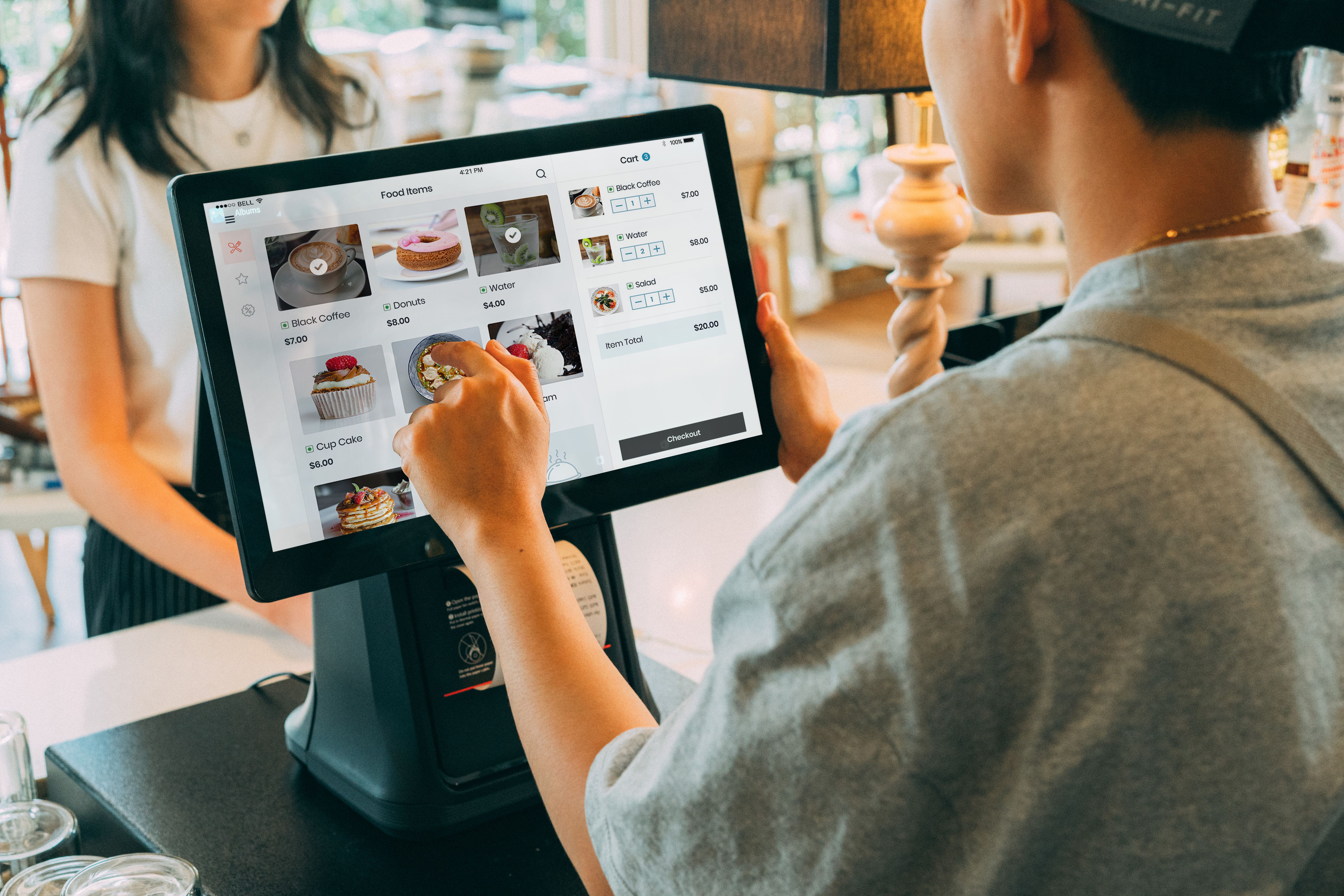
A central dashboard changes what different roles within a secure estate can actually see, without anyone needing to leave their desk or visit a site in person. Kitchen staff complete checks at the point of work, with no duplication and no diaries. Catering managers gain one live view of what has been done, what is outstanding, and what needs attention across their own kitchen. Governors and regional operations directors get a different view again: the ability to evaluate compliance across a single prison, a regional estate, or a national network, without waiting for an end-of-month written report.
That structure, single prison, regional estate, national estate, matters because the right level of visibility differs by role. A catering manager needs granular, same-shift detail. A regional operations director needs to compare consistency across a dozen sites and spot the one location quietly drifting from standard before it becomes a finding at inspection. Built well, real-time monitoring gives each of those roles exactly the view they actually need, rather than a single generic report everyone has to interpret for their own purposes.

Instant Audit Readiness
Preparing for an inspection under a paper system typically means hours spent gathering logs from multiple kitchen stations, checking they are complete, and hoping nothing has gone missing since it was filed. Digital records remove that scramble. Timestamped, encrypted, and accessible on demand, they let a site produce evidence for a single service or an entire quarter in a few clicks, rather than a few hours.
That matters as much for internal audit as it does for an external inspection. A structured internal audit process, run consistently across every kitchen in an estate, is what lets a regional team catch a drifting site before HM Inspectorate of Prisons or a local authority food safety officer does. Evidence that already exists, complete and dated, is a fundamentally stronger position to inspect from than evidence that has to be assembled under time pressure once a visit has already been announced.
A Phased Path to Estate-Wide Digitisation
Digitising food safety is rarely a single event, and it does not need to be. A typical rollout in a secure environment follows a consistent pattern: an onboarding phase where standards, checks, and site setup are configured on the platform before go-live, followed by team adoption, generally within the first couple of weeks, as kitchen staff begin recording checks digitally with minimal training required. By around the one-month mark, daily control is established, with temperature and safety records captured at the point of work as standard practice. From there, assurance becomes an ongoing state rather than a periodic exercise, with management able to review compliance at a glance and produce evidence instantly whenever it is needed.
Facilities do not need to deploy everything at once. Many begin with daily food safety logs and temperature tracking alone, then expand into structured internal audits, incident reporting, and digital staff training delivered through the Navitas Safety Academy, once the initial system is embedded and trusted by the team using it day to day.

Frequently Asked Questions
How does Navitas Safety maintain consistent compliance across multiple judicial sites?
Running a regional or national estate on paper tends to produce what is best described as interpretation drift: the same written policy executed slightly differently at every site, because each one has built its own informal workarounds over time. A digital platform replaces that with standardised workflows and centralised templates, so every site works from the same compliance playbook and executes it the same way, shift after shift, regardless of which staff happen to be on duty.
How do regional operations directors and governors gain visibility using Navitas?
Rather than waiting for an end-of-month spreadsheet or a physical site visit to review paper binders, senior leadership accesses a cloud-based dashboard directly. Role-based permissions mean a governor sees their own facility in full detail, while regional and national operations directors can compare compliance across multiple sites, spot a location beginning to drift early, and check audit readiness at any time, without needing to ask anyone to compile a report first.
What happens when a critical check is missed or a temperature threshold fails?
The system raises a real-time alert the moment a check is missed or a reading falls outside a safe range, notifying the on-site catering manager immediately rather than waiting for the next scheduled review. If the issue is not addressed, it escalates automatically up the management chain, giving regional teams the chance to step in before a local oversight becomes a wider operational or compliance problem.
How does Navitas accommodate high staff turnover and rotating kitchen teams?
Digital checks are designed around clear, visual, single-tap prompts rather than complex written procedures, allowing new starters to become familiar with the platform quickly. A shorter, focused platform navigation training session can help staff begin recording checks accurately and consistently, while reducing the time required to become confident in using the system. This complements existing food safety training and supervision, ensuring that all team members understand not only how to record checks but also the importance of the controls being monitored and the actions required when standards are not met.
Is it possible to roll out Navitas across an entire estate without operational disruption?
Yes. The platform is built for phased deployment rather than a single disruptive switch-over. Most facilities start with core daily checks and temperature logging to establish immediate control, and only expand into internal audits, incident reporting, and staff training once that foundation is running smoothly, without interrupting kitchen operations at any stage.
Supporting Operational Control to Secure Kitchens
Effective food safety management in secure kitchens relies on established procedures, competent personnel, appropriate supervision and consistent implementation of operational controls.
Digital compliance systems can complement these arrangements by simplifying routine monitoring, improving the accessibility of records and providing catering managers and regional teams with timely information to support effective decision-making.
For secure catering operations managing multiple establishments, digital technology offers an opportunity to strengthen consistency, reduce administrative demands and enhance management oversight while maintaining the fundamental principles of an established Food Safety Management System.
Explore how this works in practice on the Navitas Safety Judicial page, or book a demo to see the platform configured around a secure catering environment specifically, rather than a generic commercial one.