Operational Execution
Why standardising processes is not the same as removing local judgement
The word 'standardisation' can sound restrictive. In multi-site operations, however, a good standard does not remove judgement. It creates a reliable baseline.

In a business operating dozens of kitchens, sites will naturally have different layouts, equipment, and staffing patterns. What should not vary is the expectation that critical checks are completed, exceptions are escalated, and corrective actions are evidenced.
The cost of every site inventing its own approach
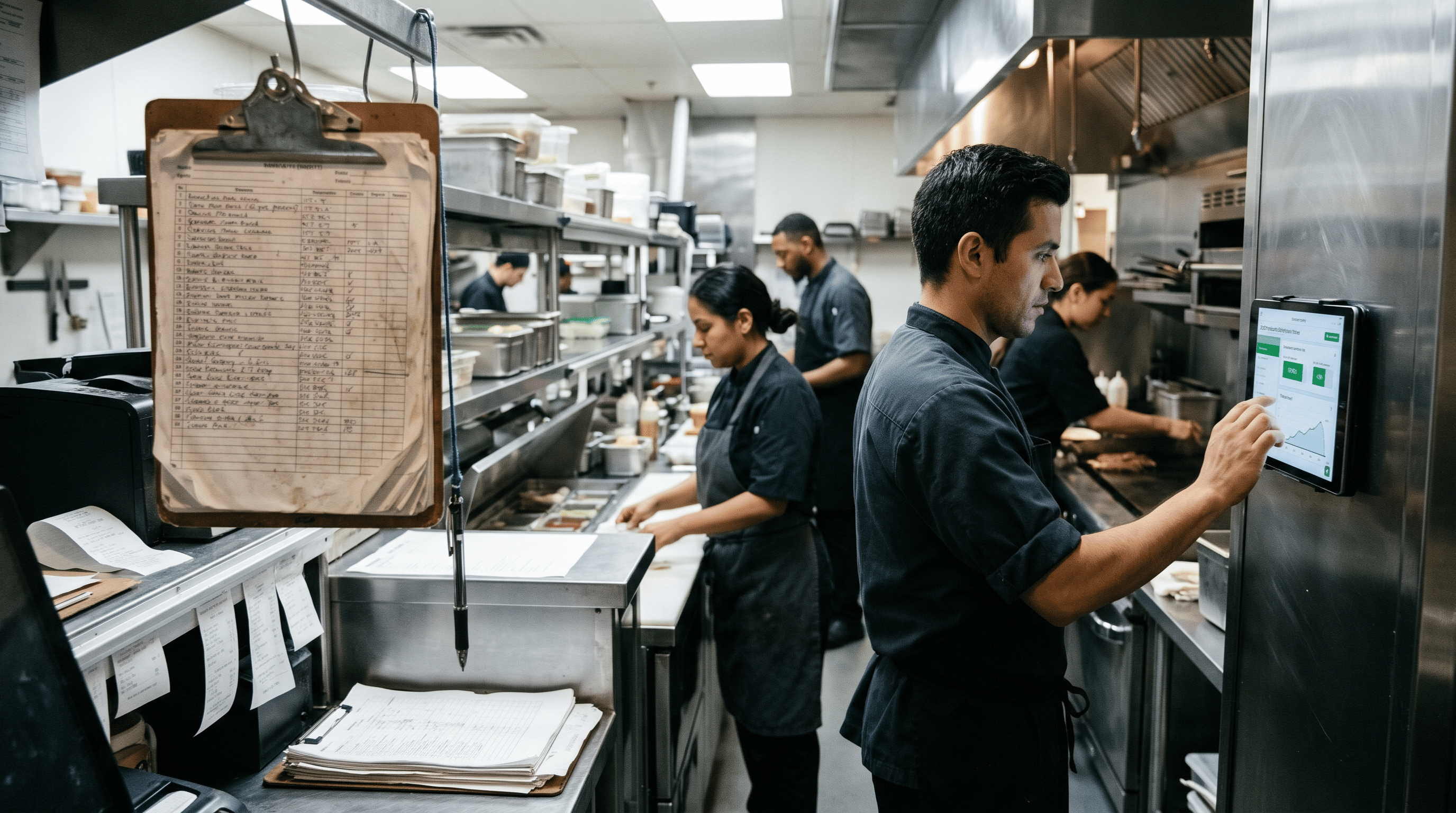
When sites build their own processes from scratch, teams end up capturing the same information in completely different ways. New managers have to learn local habits. Area managers waste hours interpreting inconsistent reports. Head office cannot accurately compare performance.
Even when every site works hard, operational variation makes estate-wide visibility almost impossible.
Set the standard, support the team
A practical model starts with clear minimum requirements and named ownership:
- Make daily checks straightforward to complete on shift.
- Explain why critical controls matter.
- Give teams a direct way to flag issues and get fast support.
From there, adapt to local realities. A site might need a different prep routine or a specific escalation contact depending on its size and opening hours. The goal is to protect the core control while allowing teams to manage how they deliver it.
Consistency drives shared learning
When every site records data in the same format, operators can quickly see which locations are excelling and where extra support is needed. That goes beyond basic compliance reporting. It allows you to replicate what works across the entire estate.
Standardisation also simplifies onboarding. New starters and incoming managers immediately know what 'good' looks like without having to learn a new system every time they cover another site.

The leadership test
Ask yourself two questions:
- Would a team member moving between two sites recognise the exact same core controls?
- Could an area manager compare those two sites without manually combining spreadsheets?
If the answer is no, your next priority is not writing another policy. It is building a clearer daily operating system.
Navitas helps multi-site operators establish that consistent daily routine through digital food safety tools built for real-world kitchens.
Speak to the Navitas team to see how a connected digital system makes standards effortless to maintain across your estate.