Risk & Foresight
Food Allergen Regulations & Safety: Protecting Your Customers & Business
Natasha's Law, the 14 allergens, and where allergen control really breaks down in a busy kitchen, plus the training that closes those gaps.

In 2016, a teenager died after a severe allergic reaction to sesame baked into a sandwich she believed was safe to eat. The packaging carried no ingredient list. Her name was Natasha Ednan-Laperouse, and the law now bearing her name exists because, at the time, a food business had no legal obligation to tell her what was actually in the food she bought. For anyone running a kitchen, a café, or a school or care home dining service today, that gap in the old law is the clearest possible illustration of what allergen mismanagement actually costs.
Allergens sit differently to most food safety hazards. A temperature log that runs a little late rarely puts someone in hospital. A missed allergen, on a menu, a label, or a verbal answer at the till, can. That combination of genuine human stakes and real legal exposure is why allergen training is one of the most consequential gaps a hospitality business can leave open, and one of the more straightforward to close properly.
This guide sets out what UK allergen law actually requires, where allergen failures most often happen in a working kitchen, and the specific training that closes those gaps for the people most likely to be standing in front of a customer, or a delivery, when it matters most.
What Natasha's Law and UK Allergen Regulations Actually Require
The 14 Allergens You Must Declare
UK food law requires 14 specific allergens to be declared whenever they are used as an ingredient, in any food sold to the public. They are: celery, cereals containing gluten (wheat, rye, barley, and oats), crustaceans, eggs, fish, lupin, milk, molluscs, mustard, peanuts, sesame, soybeans, sulphur dioxide and sulphites above 10mg per kg or litre in the finished product, and tree nuts.
These 14 were identified because, between them, they account for the overwhelming majority of serious allergic reactions in the UK. They must be declared whether the food in question is prepacked, prepacked for direct sale, or sold loose across a counter or from a menu, though the exact way that information has to be provided differs by category.
What Natasha's Law Changed for PPDS Food
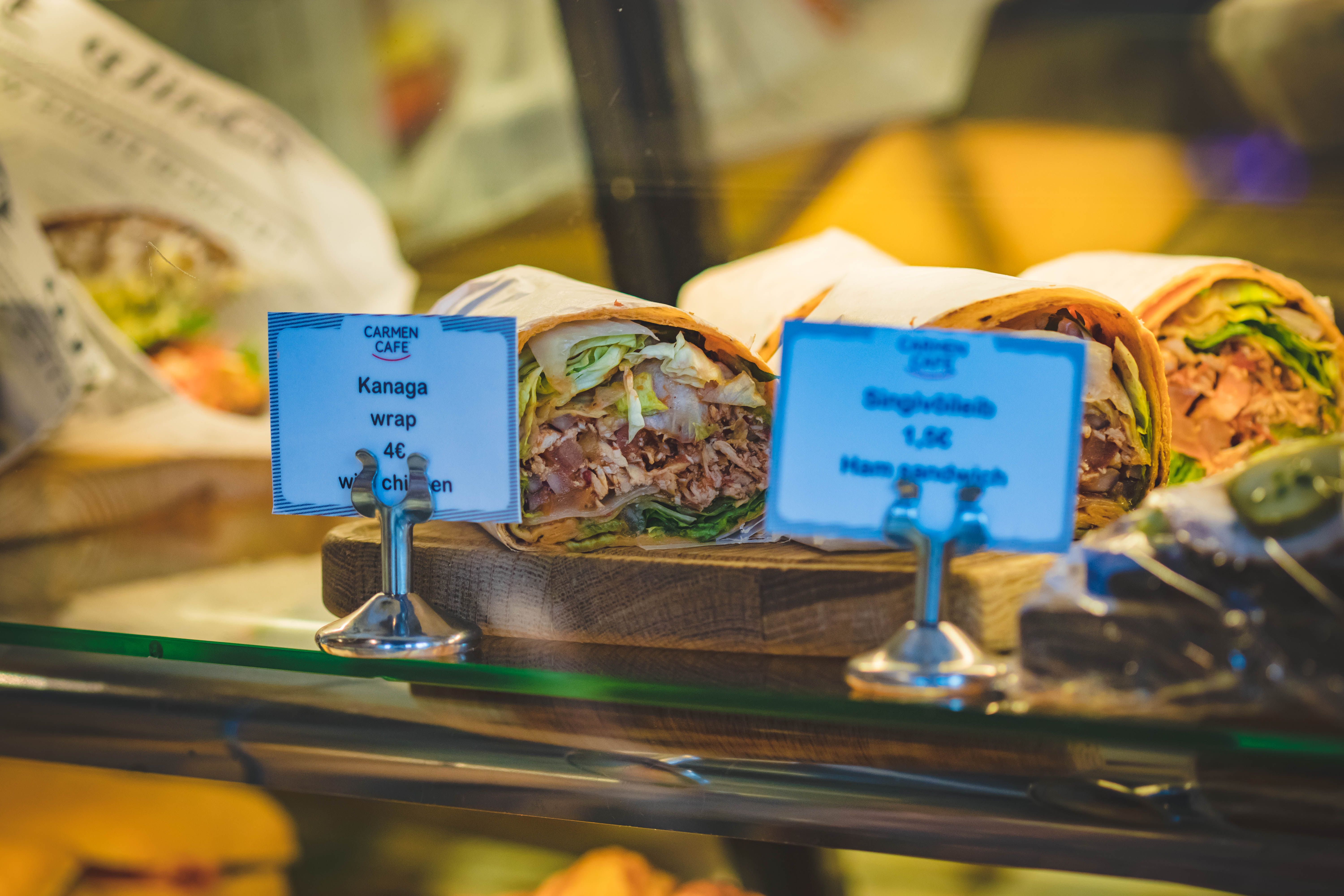
Before October 2021, food that was prepared and packaged on the same premises where it was sold, a sandwich made that morning and placed in a chiller cabinet, for instance, could have its allergen information given verbally, with no legal obligation to put anything on the packaging itself. That gap is what Natasha's Law closed.
Natasha's Law is the informal name for the Food Information (Amendment) (England) Regulations 2019, in force since 1 October 2021. It requires any food classed as prepacked for direct sale, PPDS, to carry a full ingredients list on the packaging itself, with all 14 allergens clearly emphasised, typically in bold, capitals, or a contrasting colour.
Food counts as PPDS if it meets three conditions: it is packaged before a customer selects or orders it, it is packaged at the same site where it is sold, and it is a single item combining the food and its packaging together. A wrapped baguette made that morning and placed in a grab-and-go fridge is PPDS. A sandwich made to order while the customer waits is not, though written or verbal allergen information is still a legal requirement for it.
Where This Sits Alongside Regulation (EC) No 852/2004 and the Food Information Regulations 2014
Allergen management does not sit in its own separate legal category. It is one part of the wider food safety duty set out in Regulation (EC) No 852/2004, which requires food businesses to identify and control hazards, allergens included, as part of a documented HACCP-based system. The specific labelling and information rules sit in the Food Information Regulations 2014, which Natasha's Law amended for PPDS food specifically.
For food sold loose, made to order, or from a menu, written or verbal allergen information is still a legal requirement today, even though it is not yet governed by labelling rules as strict as PPDS. That may be changing. Owen's Law, a proposal to make written allergen information compulsory at the point of ordering, named after Owen Carey, a teenager who died in 2017 after a mislabelled allergen in a restaurant meal, has Food Standards Agency backing but has not yet been passed into law. The government is currently evaluating industry uptake of voluntary FSA guidance on this, with a decision on whether legislation is needed expected to follow.
Where Allergen Failures Actually Happen
Most allergen incidents are not the result of a business deliberately ignoring the rules. They happen in the gap between what a business's paperwork says and what actually happens on a busy shift.
Cross-contact in prep areas is the most physical of these risks: a shared chopping board, a fryer used for both battered fish and chips, a utensil moved between a nut-based dish and an allergen-free one without being washed in between. None of these show up in an allergen matrix sitting in a folder. They show up in how staff actually move and work under pressure.
Verbal miscommunication at front-of-house is just as common, and often harder to catch. A server who answers an allergen question from memory, rather than checking a written source, is guessing, even with the best of intentions. A kitchen that changes a recipe or switches supplier without updating the allergen matrix creates the same risk from the other direction: the paperwork looks current, but is quietly no longer accurate.
Shared equipment compounds both problems at once. Fryers, mixing bowls, and prep surfaces used across multiple dishes need a deliberate cleaning and separation routine built into the shift, not an assumption that a quick wipe between orders is enough.
The stakes are higher again in schools and care homes, where the person eating the food often cannot check the label or ask the question themselves. A care home resident with dysphagia and a dairy allergy, or a child in a school canteen too young to reliably self-report their own allergies, depends entirely on the kitchen's own records being accurate and followed by whoever is on shift that day. In these settings, the allergen matrix is not a compliance document sitting in a drawer for an inspection; it is the only safeguard standing between a kitchen and a genuinely vulnerable person.

Course Spotlights
Navitas Safety – Allergen Awareness (FS004)
Allergen Awareness is built specifically around the 14 major allergens, cross-contact prevention, and correct labelling and communication, the exact gaps identified above. It is designed to sit alongside a Level 2 Food Safety certificate rather than replace it, giving staff who take orders or handle food the specific knowledge to answer an allergen question from a written source rather than memory, and to recognise cross-contact risks within their own section of the kitchen. Pairing it with the dedicated Natasha's Law course covers the PPDS labelling side of the picture as well, for any site that packages food for direct sale, giving a front-of-house or kitchen team the full allergen picture from two focused, role-specific courses rather than one generic one.
Navitas Safety – Health & Safety in Catering 2 (HS002)
Allergen safety does not exist in isolation from the rest of a kitchen's physical safety. Health & Safety in Catering 2 broadens the picture beyond food handling to cover the slips, trips, burns, and chemical handling, COSHH, that sit alongside allergen risk in a busy kitchen, along with the physical hazards that come from moving quickly between prep stations under service pressure.
Navitas Safety – Manual Handling Short Course (HS017)
Allergen control starts at goods-in, checking supplier labelling and keeping allergenic ingredients correctly separated during storage. Manual Handling training covers the physical side of that process: safely moving and storing stock, including the heavier crates and containers that come with keeping allergen ingredients segregated rather than mixed in with general stock during a busy delivery.
Feature Comparison: What Each Course Adds to Allergen and Workplace Safety
Each course closes a different part of the allergen and workplace safety picture. Set side by side, here is what each one specifically contributes.
None of these courses replace a documented allergen matrix or HACCP plan on their own. Together, they give the people most likely to be asked an allergen question, or to be moving and storing the ingredients behind it, the specific training to get it right.
.jpg)
Frequently Asked Questions
What are the 14 main allergens required by UK law to be declared?
Celery, cereals containing gluten (wheat, rye, barley, and oats), crustaceans, eggs, fish, lupin, milk, molluscs, mustard, peanuts, sesame, soybeans, sulphur dioxide and sulphites above 10mg per kg or litre, and tree nuts. These must be declared whenever used as an ingredient, whether the food is prepacked, PPDS, or sold loose.
Why is allergen training critical for front-of-house staff?
Front-of-house staff are usually the last checkpoint before food reaches a customer, and often the only person a customer with allergies speaks to before ordering. An untrained answer given from memory, rather than one checked against a written allergen matrix, is one of the most common points where an otherwise well-managed kitchen still lets an allergen slip through. Training turns that moment from a guess into a checked, defensible answer, which matters as much for the business's legal position afterwards as it does for the customer's safety in the moment.
How quickly will my team receive their digital certificates after passing?
Digital certificates are issued immediately on passing the end-of-course assessment, ready to download or store as part of a business's training records the same day.
Protect Your Customers and Your Business
Allergen management sits at the intersection of legal compliance and genuine customer safety in a way few other areas of food safety do. Browse Allergen Awareness, Natasha's Law, and the wider Navitas Safety course range on the Navitas Safety Training Store, and make sure the people closest to your customers and your stockroom have the specific training to match.