Operational Execution
What a strong customer story should prove: from adoption to operational impact
Customer success stories are most useful when they go beyond the logo. For a prospective customer considering a new food safety system, the most persuasive question is often simple: What changed for the people using it?

Start with the problem
A meaningful case study should explain the starting point. Perhaps a business had limited visibility across multiple sites. Perhaps managers were spending time consolidating records. Or perhaps the leadership team wanted a clearer, more consistent way of managing checks.
The strongest stories describe that challenge in the customer's words rather than presenting it as a generic technology problem.
Explain the operational change
Next comes the implementation. How were teams introduced to the new process? What did site managers need to learn? How did regional leadership use the information? What changed in the daily routine?
For customers, implementation matters just as much as product capability. A feature is only valuable when people use it in a way that improves the operation.
Demonstrate the outcome responsibly
Whenever possible, quantify results with an agreed baseline and measurement period. Time saved, improved completion, faster visibility and more consistent action follow-through can all be meaningful. But unverified numbers weaken trust.
If a metric is not yet available, an honest qualitative customer account can still be valuable. A named, approved quotation explaining what became easier is far more credible than a grand claim without evidence.
Share the lessons
The best case studies teach something transferable. What would the customer recommend to another multi-site operator? What did they learn during rollout? What would they do differently?
These are the details that make content useful to an Operations Director, rather than simply promotional.
At Navitas, we want to tell more of these stories: the people, the operational challenge and the practical results.
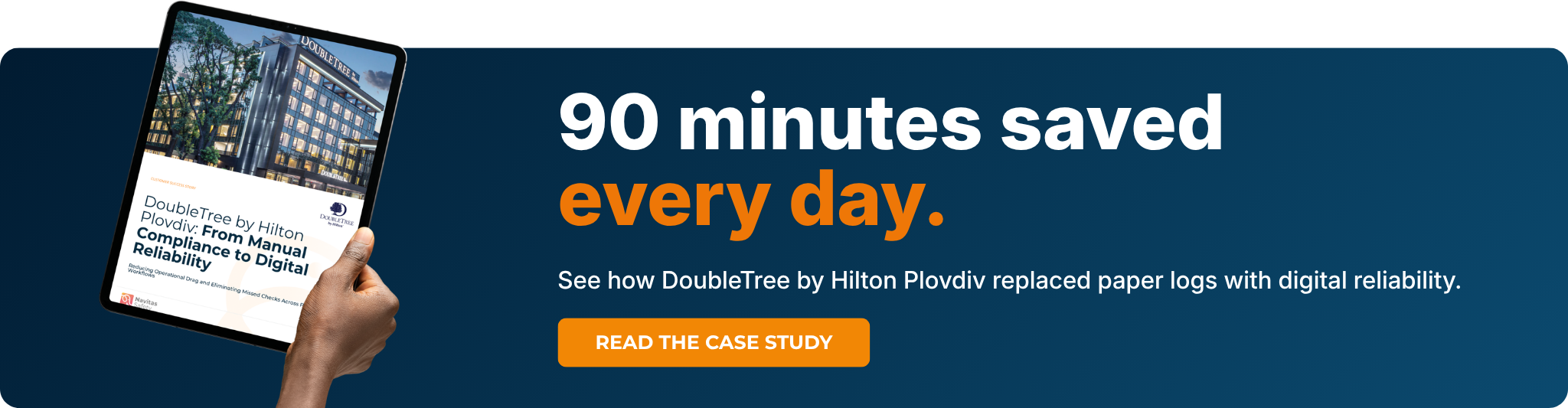
See this in practice: DoubleTree by Hilton Plovdiv Center
DoubleTree by Hilton Plovdiv Center, an upscale hotel in Plovdiv, Bulgaria, put these principles into practice when replacing paper safety logs.
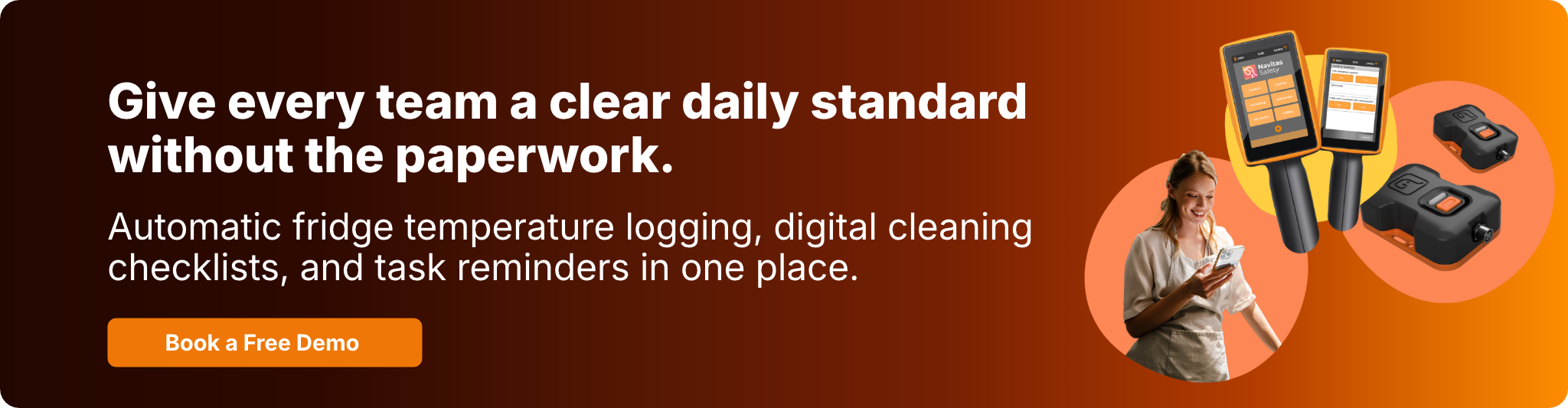
To stop missed checks and reduce paperwork for staff, the hotel introduced Navitas Safety Digital Food Safety (DFS). With automatic refrigerator temperature logging, digital cleaning checklists, and task reminders, the team moved from manual tracking to live process control.
The results included:
- 90 minutes saved per day, freeing up 42 hours a month and 63 working days a year to focus on guests.
- Fewer missed checks and human errors using central digital records and task alerts.
- Less paper, printing, food, and energy waste.
"We would recommend the system because it reduces manual work, saves time, and significantly limits the potential for human error. When used to its full potential, it can make daily processes easier, more reliable, and better controlled."
Zlatka Hadzhiyska, Chief Engineer / Safety & Security Manager, DoubleTree by Hilton Plovdiv Center