
Operational Execution
From reactive checks to operational control: what changes when food safety goes digital
For many multi-site hospitality operators, food safety assurance still relies on a familiar routine: someone completes a check, records a result, and a manager reviews it later. This creates a record. But does it give the business control?
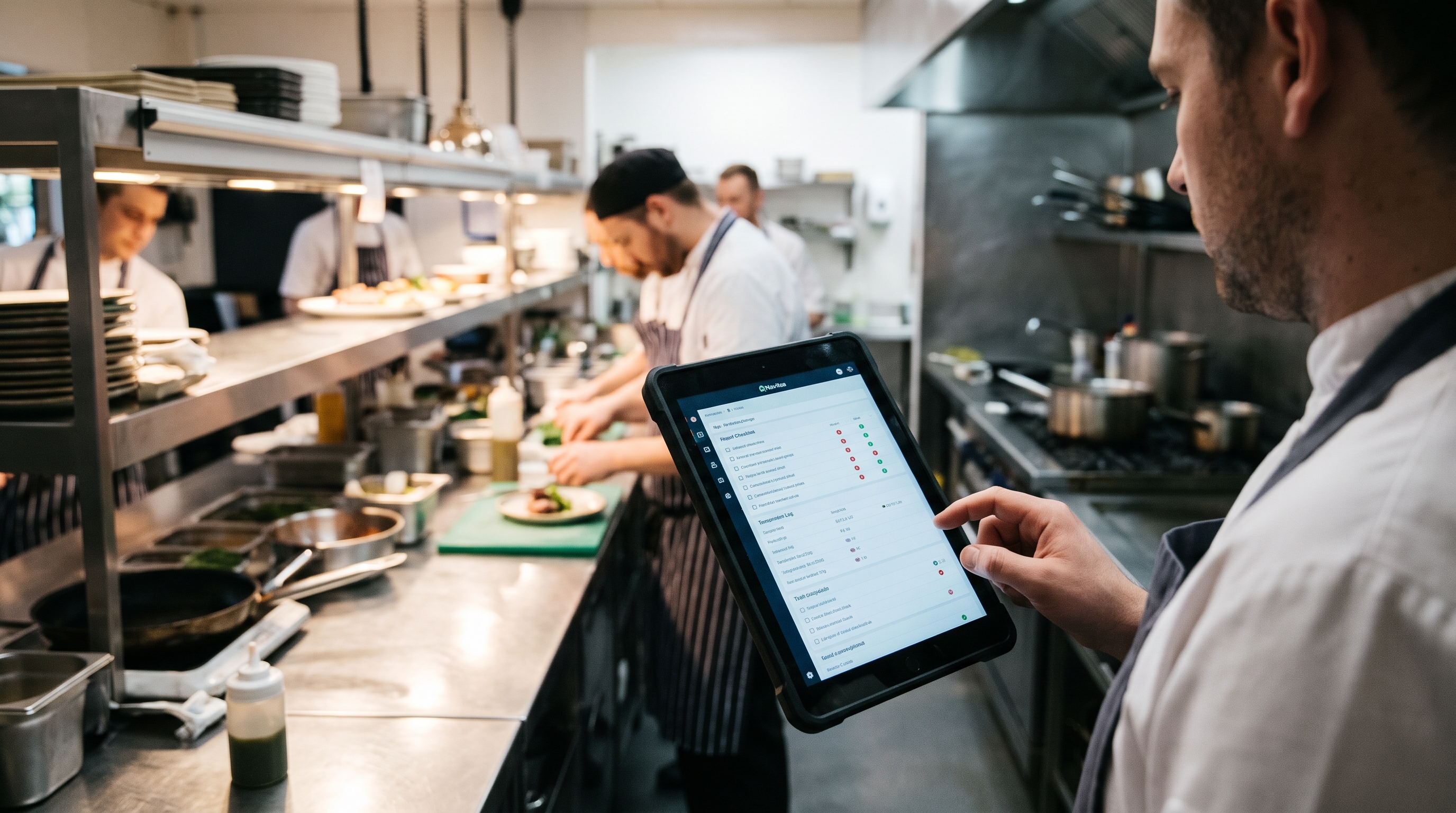
The distinction matters. A completed record tells you what somebody logged at a point in time. Operational control means knowing what is happening across locations, where standards might be drifting, and which issues need attention before they become repeated failures.
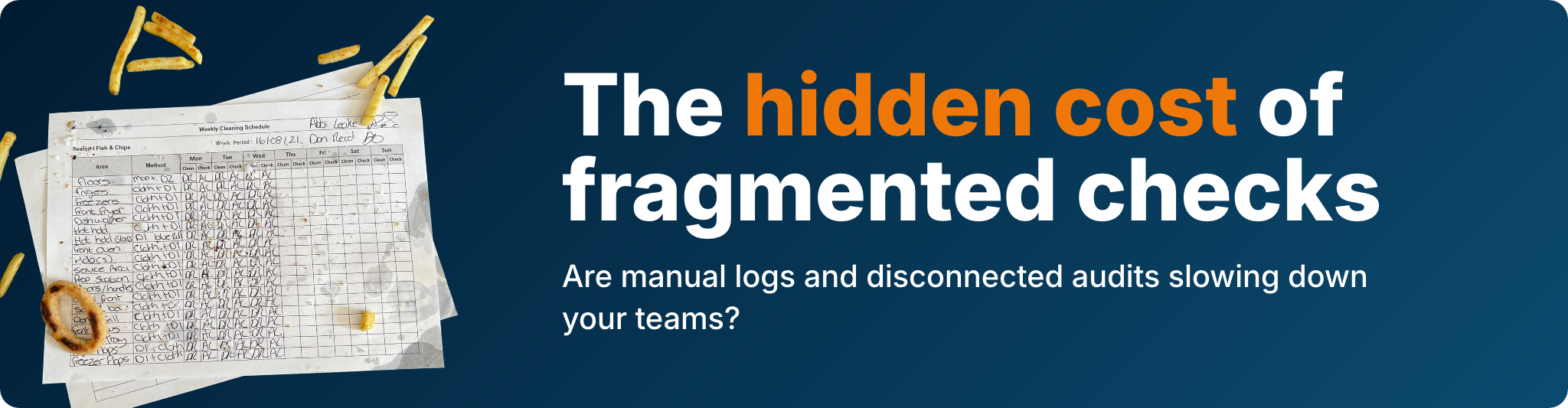
The hidden cost of fragmented checks
When temperature records, corrective actions, and site audits are handled through disconnected processes, teams spend time transferring information rather than acting on it:
Regional managers discover gaps during scheduled visits rather than when the issue first emerges.
Head office teams waste hours chasing individual sites for compliance logs that should already be centralized.
On-site staff lose valuable prep and service time manually transcribing data between clipboards, spreadsheets, and logbooks.
For a single location, these friction points might appear manageable. Across dozens or hundreds of sites, they become an operational challenge: different processes, inconsistent visibility and avoidable administration.
Move from collecting evidence to using it
Digital food safety creates an opportunity to standardise how checks are completed and how exceptions are handled. That does not remove the need for good judgement at the site level. It makes that judgement easier to support with timely, accessible information.
Consider three questions every Operations Director should be able to answer in seconds:
1. Which locations are consistently completing their checks on schedule?
2. Where are temperature or compliance exceptions actively emerging?
3. Are corrective actions being resolved thoroughly, or simply marked as complete?
A clear answer to those questions can change management conversations. Instead of asking whether a checklist exists, leaders can focus on resolving recurring issues and providing practical support where it matters most.
A more useful measure of success
Success is not simply the number of digital records created. It is measurable in:
Time returned to site teams to focus on guest experience and quality.
Consistent execution across every kitchen and service line.
Proactive oversight, giving leadership the confidence that critical exceptions surface instantly.
At Navitas, our focus is helping operators make safety part of daily operational performance, rather than a separate administrative exercise.
A question for your leadership team:
If you needed to identify your highest-risk locations across your estate this morning, how quickly could you do it?

Frequently Asked Questions
1. How does digital food safety differ from simply digitising paper checklists?
Digitising a paper checklist (such as filling out a PDF or spreadsheet) merely replaces pen and paper with a screen; it records what happened in the past without validating the data in real time. A dedicated digital food safety system provides automated alerts when temperatures drift outside safe ranges, enforces mandatory corrective action steps, and syncs data to an executive dashboard immediately. The difference is moving from a static filing system to active operational control.
2. How does real-time exception reporting work across multiple locations?
When an issue occurs—such as a refrigeration unit exceeding its critical temperature limit or a routine line check being missed—the system flags an exception immediately. On-site staff receive automated prompts directing them through required corrective actions, while area managers and head office teams receive real-time notifications on their central dashboard. This eliminates the delay of waiting for end-of-week summaries or scheduled site visits to discover compliance failures.
3. What operational time savings can multi-site venues expect after going digital?
Operators typically save significant administrative hours per site each week by replacing manual clipboard logging, filing, and double-entry reporting with automated probes and digital checklists. For head office and regional managers, audit preparation and compliance reporting time is cut from days to minutes, as centralized data can be exported on demand across any or all estate locations.
4. How does digital food safety software help prepare for EHO and external audits?
During an Environmental Health Officer (EHO) visit or third-party audit, operators can pull up time-stamped, tamper-proof historical logs, temperature records, and documented corrective actions with a single click. Instead of searching through physical binders or missing sheets, teams present a clean, verifiable audit trail that demonstrates consistent due diligence and process control.